
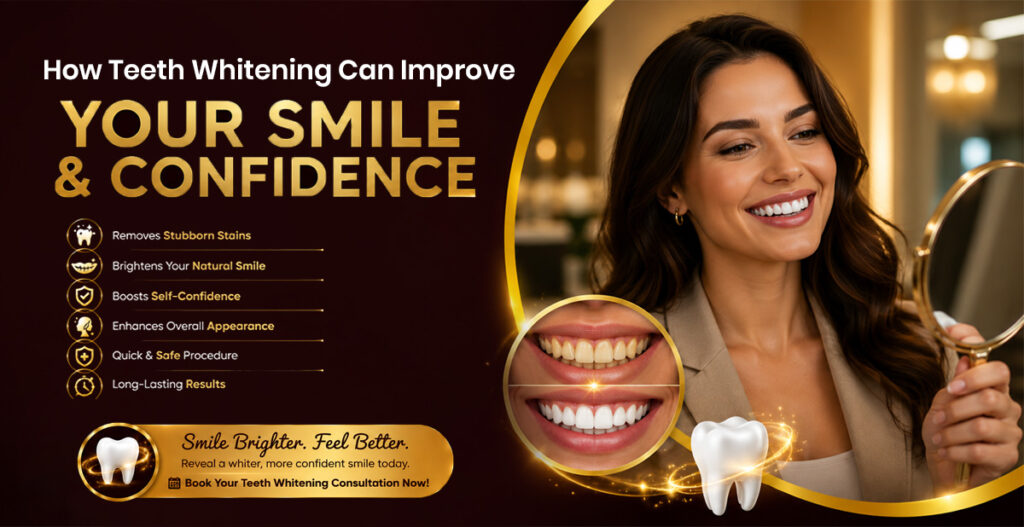
Your smile is often the first thing people notice about you. Yet, for millions of people, discoloured or stained teeth quietly chip away at self-esteem — holding them back from laughing freely, smiling for photos, or simply walking into a room with confidence. The good news? Teeth whitening is one of the simplest, most effective cosmetic dental treatments available today. And the results go far deeper than just aesthetics.
Why Do Teeth Lose Their Whiteness?
Before understanding the solution, it helps to understand the problem. Teeth naturally yellow over time due to a variety of lifestyle and biological factors:
•Coffee, tea, and red wine — the most common culprits for surface staining
•Tobacco use — both smoking and chewing cause deep, persistent discolouration
•Ageing — enamel naturally wears down with age, revealing the yellower dentin underneath
•Certain medications — antibiotics like tetracycline can cause intrinsic staining
•Poor oral hygiene — plaque buildup gradually darkens the tooth surface
•Fluorosis — excessive fluoride during tooth development can cause white spots or brown marks
While surface stains from food and drink are relatively easy to treat, deeper intrinsic stains may require professional-grade whitening or alternative cosmetic procedures. A dentist will assess the type of discolouration before recommending the most appropriate treatment.
Types of Teeth Whitening Treatments
Not all whitening treatments are created equal. Here’s a breakdown of what’s available:
1. In-Office Professional Whitening
This is the most powerful and fastest option. A dentist applies a high-concentration bleaching gel directly to the teeth, often activated by a special light or laser. Results are visible in a single session — typically 60 to 90 minutes — with teeth lightening by several shades.
2. Take-Home Whitening Kits (Dentist-Prescribed)
Your dentist creates custom-fitted trays and provides a professional-grade whitening gel. You wear the trays at home for a specified duration daily, usually for one to two weeks. Results are gradual but long-lasting.
3. Over-the-Counter Products
Whitening toothpastes, strips, and gel kits are widely available but contain lower concentrations of whitening agents. These can maintain results between professional treatments but are less effective for significant discolouration.
Quick Comparison: Whitening Options
✓ In-office whitening: Fastest results, strongest formula, done by a professional
✓ Take-home trays: Custom-fit, dentist-supervised, gradual and controlled
✓ OTC products: Mild maintenance, widely accessible, lower concentration
The Confidence Connection: More Than Just a White Smile
The psychological impact of a brighter smile is well-documented. Studies consistently show that people who are satisfied with their smile are more likely to smile more often — and smiling more has a direct positive effect on mood, approachability, and social interactions.
Patients who undergo teeth whitening frequently report:
•Feeling more confident in personal and professional settings
•Greater willingness to engage socially and be photographed
•Improved first impressions in interviews and meetings
•Reduced self-consciousness when speaking or laughing
This is why teeth whitening isn’t vanity — it’s an investment in how you present yourself to the world.
Is Teeth Whitening Right for You?
Teeth whitening is safe and effective for most people, but it’s not a universal solution. Whitening agents work on natural tooth enamel — they do not change the colour of crowns, veneers, or dental fillings. Your dentist will evaluate your oral health before recommending treatment.
Teeth whitening is generally not recommended for:
•Pregnant or breastfeeding women
•Children under the age of 16
•People with gum disease, tooth decay, or extremely sensitive teeth
•Those with intrinsic staining that won’t respond to bleaching
A proper dental consultation ensures you get the right treatment — and the results you’re actually expecting.
How Long Do Results Last?
Professional whitening results can last anywhere from six months to three years depending on diet, oral hygiene, and lifestyle habits. To maintain your results:
•Avoid heavy staining foods and drinks for 48 hours post-treatment
•Brush twice daily with a whitening toothpaste
•Schedule periodic touch-up treatments with your dentist
•Rinse with water after consuming coffee, tea, or wine
Final Thought
A whiter smile is one of the most immediate, visible improvements you can make to your appearance — and how you feel about yourself. Whether you’re preparing for a big event, a professional milestone, or simply want to feel better in your daily life, teeth whitening is a safe, proven option worth exploring.
Consult with your dentist to determine the best whitening approach for your specific needs. Because the confidence that comes with a great smile? That’s completely priceless.