
Introduction
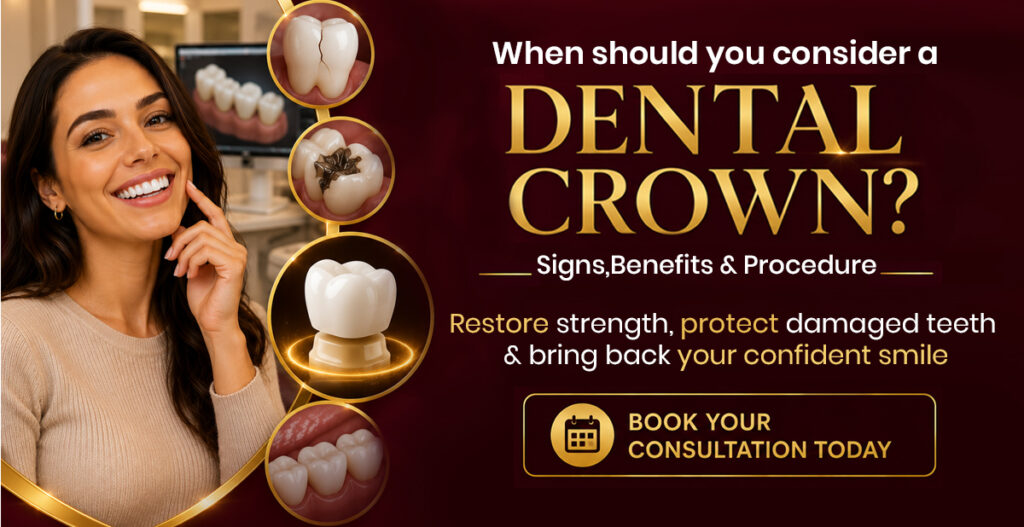
A dental crown is a custom-made cap that fits over a damaged or compromised tooth, covering it entirely from the gum line up. Once cemented in place, it restores the tooth’s original shape, size and strength, and functions exactly like a natural tooth.
Crowns can be made from several materials, including:
- Porcelain or ceramic: The most natural-looking option and usually the preference for front teeth
- Porcelain fused to metal: Strong and realistic, often used for back teeth
- Full metal or gold alloys: Very durable, typically used for back molars where aesthetics matter less and bite force is highest
- Zirconia: A modern option combining strength with a natural appearance
Your dentist will recommend the best material based on which tooth is being crowned, how much force it bears in your bite, and what result you’re after aesthetically.
Signs You May Need a Dental Crown
This is where a lot of patients get caught out. The need for a crown isn’t always obvious until a dentist examines the tooth properly, but there are signals worth knowing.
1. A Cracked or Fractured Tooth
Cracks in teeth don’t always cause immediate pain, which is exactly what makes them easy to ignore. A small crack might stay stable for a while, then suddenly worsen after biting something firm. When a crack extends toward the root or compromises the structural integrity of the tooth, a crown holds the pieces together and prevents the fracture from progressing further. Left without protection, a cracked tooth will eventually split in a way that may no longer be saveable.
2. Extensive Tooth Decay That a Filling Can’t Fix
Fillings are excellent for smaller cavities, but there’s a point where decay has eaten through too much of the tooth for a filling to be a reliable long-term solution. When more than half of the tooth’s structure is compromised, a crown offers better coverage and protection. According to AIHW data, nearly one in three Australian adults has untreated tooth decay at any point in time, and many of those cases have progressed further than a simple filling can manage.
3. After a Root Canal Treatment
A root canal removes the infected pulp from inside a tooth, which solves the infection but leaves the tooth more brittle than a healthy tooth. Without protection, a root-canal-treated tooth is significantly more likely to crack under the pressure of everyday chewing. Dentists almost universally recommend a crown after root canal treatment on back teeth for this reason. It’s not optional extras, it’s protecting the investment you’ve already made.
4. A Broken or Severely Worn Tooth
Physical breakage from an accident or from years of teeth grinding can leave a tooth too short or misshapen to function properly. A crown rebuilds the tooth to full height and restores the bite. Patients who grind their teeth heavily (bruxism) often find their back teeth wearing down faster than expected, and crowns are a common part of the repair and protection plan in those cases.
5. A Large Old Filling That’s Breaking Down
Large fillings don’t last forever, especially when they were placed many years ago. When an old filling starts cracking, leaking or shifting, the surrounding tooth structure becomes vulnerable to new decay. Rather than simply replacing a filling that keeps failing, a crown protects the remaining tooth structure more effectively.
6. A Cosmetic Concern on a Structurally Sound Tooth
In some cases, crowns are used purely for appearance, such as a severely discoloured tooth that hasn’t responded to whitening, or a misshapen tooth that affects the symmetry of a smile. That said, if the tooth is otherwise healthy, your dentist may suggest veneers instead, since they involve much less removal of natural tooth structure. The honest recommendation will depend on what’s actually happening with the tooth.
Tooth Crown Benefits: What a Crown Actually Does For You
There’s a reason crowns are one of the most routinely performed restorations in general dentistry. When done at the right time, the tooth crown benefits are significant and long-lasting.
- Restores full chewing function: A crowned tooth functions like a natural tooth, letting you eat without pain or concern about the tooth giving way
- Prevents further damage: Sealing off a cracked or weakened tooth stops bacteria from entering and the damage from worsening
- Eliminates pain from damaged teeth: Many patients find significant relief once a symptomatic tooth is properly protected
- Long lifespan: A well-fitted crown, maintained with good oral hygiene and regular check-ups, can last 10 to 15 years or longer
- Natural appearance: Modern crown materials are matched to your existing tooth colour, so the restoration blends naturally
The Dental Crown Procedure, Step by Step
Knowing exactly what happens takes a lot of the anxiety out of the process. Most crown placements involve two appointments.
First Appointment: Preparation and Impressions
Your dentist numbs the area thoroughly before starting, so the actual preparation is generally comfortable. The tooth is shaped on all sides to create space for the crown to sit over it without feeling bulky in your bite. The amount of shaping depends on the crown material and how much natural tooth remains.
Once the tooth is shaped, digital scans or physical impressions are taken, which are sent to a dental laboratory to fabricate your custom crown. A temporary crown is placed over the prepared tooth while you wait, protecting it and keeping the area functional.
Second Appointment: Fitting the Permanent Crown
When your permanent crown returns from the lab, usually within one to two weeks, you come back to have it fitted. Your dentist checks the fit, the bite alignment and the appearance before cementing it permanently. Minor adjustments are made at this stage to ensure the crown sits correctly in your bite.
Some practices now use same-day crown technology with in-house milling equipment, which can condense the process into a single visit. Ask your dentist whether this option is available for your case.
After Your Crown Is Placed
Some sensitivity to temperature or mild soreness around the gum line is normal for a few days after each appointment. This settles on its own. Caring for a crown is the same as caring for natural teeth: twice-daily brushing, daily flossing (working around the gum line at the base of the crown), and keeping up with your regular preventive dental care appointments.
How Long Do Dental Crowns Last?
With good oral hygiene and regular dental visits, most crowns last between 10 and 15 years, and many last significantly longer. The factors that affect longevity are the same ones that affect your natural teeth: how well you clean around them, whether you grind your teeth, and whether you stay on top of routine check-ups.
This is one reason the $249 New Patient Offer at Vogue Family Dental is a good starting point for anyone who hasn’t had a proper check-up recently. A comprehensive exam with X-rays gives a clear picture of which teeth are at risk before a crisis develops, rather than waiting until a tooth needs emergency repair.
Damaged Tooth Repair: Is a Crown Always the Answer?
Not necessarily. Depending on the extent of the damage, a dentist might recommend:
- A filling for small-to-moderate cavities on otherwise healthy teeth
- A veneer for cosmetic concerns on structurally sound teeth
- A dental inlay or onlay for moderate damage that doesn’t require full crown coverage
- An implant if the tooth can’t be saved at all and needs replacing rather than restoring
A trustworthy dentist will always recommend the most conservative option that genuinely solves the problem. If crowns keep coming up in your dental conversations, it’s usually because the tooth structure genuinely warrants it.
Why Timing Really Does Matter
Dentate Australian adults have an average of 4.4 teeth missing due to decay and periodontal disease, according to AIHW national survey data. A significant number of those losses were preventable with timely restorative treatment. A tooth that needed a crown two years ago and didn’t get one often ends up as a tooth that now needs an implant instead.
This isn’t said to alarm anyone, but it is worth being real about. Regular check-ups and acting on your dentist’s recommendations at the right time almost always leads to simpler, more affordable treatment than waiting until the situation forces your hand.
Conclusion
Whether you’ve noticed a crack, been told your old filling is failing, or just want to get a proper check on a tooth that’s been playing up, the team at Vogue Family Dental is here to give you a straight answer. Book the $249 New Patient Offer, comprehensive examination, two X-rays, scale and clean and personalised treatment plan included, and find out exactly where your teeth stand before a small problem becomes a bigger one.
Frequently Asked Questions
1. Is getting a dental crown painful? The preparation appointment is done under local anaesthetic, so the process itself is generally comfortable. Mild soreness or temperature sensitivity for a day or two afterward is normal and settles quickly.
2. How long does a dental crown procedure take? The first appointment typically takes an hour or so for preparation. A second visit a week or two later fits the permanent crown. Some clinics offer same-day crowns using in-house digital milling technology.
3. Does Medicare or private health insurance cover dental crowns in Australia? Medicare doesn’t cover dental crowns as a standard benefit. Private health insurance with major dental extras cover may contribute toward the cost, depending on your policy and waiting periods. Check with your fund directly before booking.
4. Can I eat normally with a temporary crown? You can, but it’s worth being cautious. Avoid very sticky or hard foods while the temporary is in place, as temporary crowns are not as securely fixed as permanent ones.
5. How do I know if my crown needs replacing? Signs include visible wear or chipping, sensitivity at the gum line, a change in bite feel, or a crown that feels loose. Your dentist checks crown integrity at routine appointments and can spot issues early.